Spring 2026
Tactical dehydration and fighter pilot performance risks
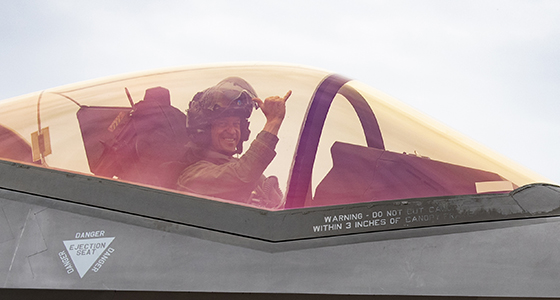
Fighter aviation is often discussed in terms of aircraft performance, tactics and technology. Less visible but equally decisive is the human system operating inside the cockpit. In hazardous flight conditions, the limiting factor is rarely the jet; it is the pilot’s ability to sustain cognitive and physical performance under prolonged physiological stress.
One of the most persistent, least-examined stressors affecting fighter pilots is hydration. For decades, “tactical dehydration” was an accepted, if unspoken, practice — pilots deliberately restricted fluid intake to avoid the need for bladder relief while strapped into an ejection seat, layered in survival gear and operating in environments where distraction could have fatal consequences.
This practice was never about comfort; it was about risk management in an environment that offered no safe alternative. But, it has become clear that tactical dehydration imposes a significant and unnecessary performance penalty. Advances in automated bladder-relief technology have eliminated the tradeoff that once forced pilots to choose between hydration and focus.
Why tactical dehydration became embedded in fighter culture
The fighter cockpit is one of the most physically restrictive operational environments in the military. Once strapped into the seat, movement is limited by harnesses, anti-G garments, oxygen equipment and survival systems. During hazardous missions, the physical burden increases further.
Cold-weather and overwater operations often require thermal undergarments, flame-resistant flight suits, immersion dry suits sealed at the wrists and neck, anti-G suits and outer survival layers. These systems are essential for postejection survivability but they significantly reduce mobility and complicate physiological self-management.
Historically, bladder-relief options were incompatible with this reality. Manual relief devices required awkward movement, partial undressing or visual attention — actions that conflicted with safe aircraft operation, particularly during turbulence, aerial refueling or emergency procedures. For pilots sealed inside immersion suits, many options were functionally unusable.
The operational solution became behavioral. Pilots learned to manage hydration by minimizing it. Tactical dehydration was passed down informally as an accepted adaptation to an unsolved problem.
The human performance cost of dehydration
From a conditioning and performance standpoint, dehydration is not a minor inconvenience, it is a physiological disruptor. Research consistently shows that even mild dehydration degrades reaction time, attention, working memory and decision-making. These effects occur well before a pilot experiences overt thirst or discomfort.
Dehydration also accelerates fatigue by reducing plasma volume, increasing cardiovascular strain and impairing thermoregulation. In hazardous flight conditions, these effects are magnified. Cold exposure increases fluid loss through cold diuresis while suppressing thirst signals. High cognitive workload masks early performance decline.
For long-duration sorties, the result is cumulative degradation. Tasks require more mental effort. Cognitive flexibility decreases. Error tolerance narrows. When combined with other operational stressors, the performance penalty becomes significant.
From a training perspective, this matters because degraded cognition undermines tactical execution long before physical exhaustion becomes obvious.
Survival gear as a performance constraint
Survival equipment is designed to preserve life after ejection, not to optimize in-cockpit physiology. Yet, pilots must operate effectively while wearing it for hours at a time.
Thermal layers, immersion suits and outer garments restrict movement, trap heat and increase perspiration. Once sealed, pilots cannot adjust clothing or posture. Any physiological management system must function passively and reliably without increasing task load or diverting attention.
For decades, the lack of such systems reinforced dehydration as the default coping strategy. As aircraft endurance increased and sortie lengths extended, the gap between aircraft capability and human support systems became increasingly evident.
Endurance under hazard: An operational case study
The performance implications of hydration management become clear during long-duration ferry and combat-support missions. During a winter ferry operation supporting Finland’s fighter evaluation program, my team flew F-35s across the north Atlantic in February — a mission exceeding 10 hours in duration.
Conditions included Arctic darkness, extreme cold, limited diversion options and repeated aerial refuelings in turbulent air. Each refueling required precise aircraft control and sustained cognitive focus. There was no margin for distraction.
Historically, missions of this length almost guaranteed tactical dehydration. On this flight, dehydration was not an option. Sustained cognitive performance required proactive hydration throughout the mission, not just before takeoff.
That operation reinforced a fundamental performance principle: Endurance missions demand hydration discipline, and hydration discipline is impossible without safe, distraction-free bladder relief.
How Omni Defense solved the problem years ago
Automated bladder-relief technology is not a recent concept. Omni Defense Technologies began addressing this operational gap more than two decades ago, driven by direct feedback from military aviators.
Early systems focused on eliminating unsafe movement and distraction during relief. Over time, increasingly reliable solutions were developed across multiple aircraft platforms and mission profiles, culminating in Skydrate, a fully automated, hands-free bladder-relief system designed specifically for modern military aviation.
The system integrates with male and female aviator garments and routes through flight and immersion suits to a compact pump and collection unit engineered to detach safely during ejection. Skydrate is the only fully automated bladder-relief system certified safe-to-fly across all U.S. military aircraft, reflecting extensive testing and operational validation.
While some vendors have more recently entered this space, Omni Defense’s advantage lies in experience. Decades of operational use and feedback allowed the company to address not only basic functionality but also workload management, safety integration and reliability under hazardous conditions.
Eliminating the hydration tradeoff
The most important effect of automated bladder-relief systems is behavioral. When pilots trust the system, hydration habits change. Fluid intake becomes proactive rather than restrictive. Cognitive endurance improves. Fatigue accumulation slows.
For training and conditioning professionals, this is significant. Hydration supports thermoregulation, cardiovascular efficiency and cognitive resilience. By removing the forced tradeoff between hydration and safety, modern bladder-relief systems alter the physiological baseline from which pilots operate during long and hazardous missions.
The elimination of tactical dehydration allows training to focus on sustained execution rather than endurance through deprivation. It improves recovery, reduces cumulative fatigue, and supports long-term health — outcomes that matter across all high-performance tactical domains.
Clear minds in hazardous environments
Fighter pilots operating in hazardous conditions rely on more than skill and conditioning. They rely on systems that protect cognitive and physiological performance over time.
Tactical dehydration was once an accepted compromise. Today, it is a solved problem. Automated bladder-relief technology removed a silent limiter on endurance and focus, allowing pilots to hydrate properly and operate at peak effectiveness when conditions are most demanding.
For those responsible for training, conditioning, and equipping tactical professionals, the message is clear: Performance is not just trained, it is enabled.
Click here to contact Billie Flynn.