Spring 2026
Why grip strength is critical for firefighter readiness, longevity
In the fire service, we measure what we value. For years, aerobic capacity — often expressed as VO₂ max — has dominated conversations around annual testing, fitness standards and medical clearance. Cardiovascular health matters; it always will. But, if we are serious about performance, injury prevention and occupational longevity, we must widen the lens.
Grip strength — and more importantly, grip endurance — is one of the most overlooked yet powerful indicators of tactical readiness.
Research consistently links lower grip strength to increased risk of cardiovascular disease, metabolic syndrome, Type 2 diabetes, cognitive decline, depression, musculoskeletal injury and all-cause mortality. A simple 5-kilogram drop in grip strength has been associated with significantly higher risk of heart disease, lung disease and cancer.
But for firefighters, grip strength is more than a biomarker, it is operational currency.
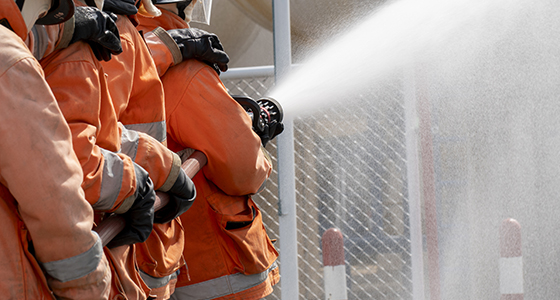
On the fireground, we rarely squeeze something maximally for 3 seconds and call it a day. We carry hoses and patients, drag charged lines, force doors, climb ladders and manipulate tools under fatigue. All this occurs while wearing 50-70 pounds of gear, often after sleep disruption and with elevated sympathetic nervous system activity.
This is not about peak grip strength, it is about sustained grip output under systemic fatigue.
When the forearms fatigue, performance degrades rapidly, tool control declines, compensations increase and proximal joints — elbows, shoulders, even the lumbar spine — absorb stress they were not meant to handle. This is where overuse injuries and acute strains begin to appear.
If the hand cannot hold, the system cannot perform.
We talk about posterior chain strength. We talk about aerobic base. We talk about power production. All that matters. But the distal link — the hand — is often the bottleneck, and bottlenecks dictate outcomes.
For firefighters, who face elevated risks of cardiovascular disease, sleep disruption, chronic stress exposure and metabolic dysfunction, a simple, low-cost assessment like handgrip dynamometry can provide valuable insight into overall physical status.
Load management and the forearm bottleneck
Firefighters operate under significant autonomic load while on shift. Hypervigilance, call volume, sleep interruption and emotional stress elevate sympathetic tone. When we layer high-intensity circuits and ego-driven training on top of that without strategic planning, we compound systemic fatigue.
The forearm is often the first place this shows up.
High-repetition barbell work, aggressive pulling volume, daily high-intensity circuits, excessive deadlifting and constant gripping can create chronic flexor overload. Add in tool use and hose handling on shift and we have a recipe for medial elbow pain, shoulder irritation and grip fatigue.
The solution is not to eliminate grip stress. The solution is to periodize it.
Just as we undulate intensity for the central nervous system, we should undulate gripping demands. Heavy bilateral pulls one day, carries another. Lower-intensity aerobic base work where grip is minimally taxed. Intentional recovery days that reduce axial and gripping load.
If we want resilient firefighters, we must respect the cumulative stress of gripping under load.
Practical integration into annual testing
What would it look like to integrate grip assessment into a department’s annual testing battery?
1. Handgrip dynamometry. Three trials per hand, best score recorded. Track annually. Look for meaningful drops over time, not just raw numbers.
2. Loaded-carry endurance test. Timed farmer’s carry at a standardized percentage of bodyweight or fixed implement load. This reflects grip endurance under locomotion — closer to job demands than a single squeeze.
3. Task-based evaluation. Combine grip-demanding tasks — hose drag, stair climb with tool carry, equipment raise — to assess performance under fatigue.
When paired with VO₂ max or submaximal aerobic testing, departments gain insight into both central and peripheral readiness. We should stop pretending one number tells the whole story.
Building grip strength in firefighters does not require exotic tools, it requires intention, such as heavy farmer’s carries, trap bar holds, towel or rope pull variations, sandbag carries, dead hangs (progressed strategically) and sled drags with rope pulls.
On-shift days should emphasize moderate strength, control and durability, leaving two reps in reserve and avoiding grinding sets. Off-shift days can target higher intensity or longer carries. Aerobic base work should make up the majority of conditioning to support recovery.
Grip endurance improves when aerobic capacity improves. Peripheral tissues recover better when systemic fitness is higher. Everything connects.
Beyond performance: Longevity
Grip strength is a small measurement with big implications. It reflects strength, muscle mass, neural integrity and systemic health. It predicts function as we age. It gives us insight into readiness today and resilience tomorrow.
Grip is not just about holding a barbell; it is about holding the line — literally and figuratively — under stress, fatigue and load.
Test it. Train it. Periodize it. Respect it.
Because when the grip fails, the system fails, and when the system is prepared, the firefighter lasts.