Building effective police basic training programs for long-term readiness
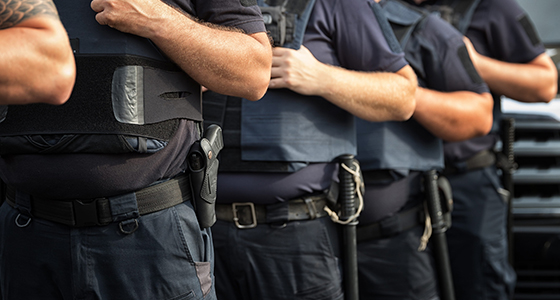
Police officer basic training is the initial exposure in which recruits encounter professional, procedural, tactical and legal obligations required for law enforcement. Through teaching practices and modeling of professional behavior, these programs help recruits begin to form an identity associated with the profession.
Since police officer basic training courses are typically governed by a state entity or commission, academies around the world have various program structures. Physical fitness training is not always required and is commonly displayed as a recommendation.
For academy programs that do facilitate physical preparation, training staff do not always display proficiency or qualifications in designing formal strength and conditioning programs, providing sufficient instruction and education, assessing key performance indicators and selecting exercise variations that address occupation-specific movement patterns and loads.
After the midpoint of many programs, physical training is often scaled back as hands-on instruction ramps up, which can limit continued development of physical readiness.
Periodization
Police officer basic training courses that facilitate periodized preparation programs should monitor and manipulate training variables, such as frequency, volume, intensity, load and velocity, not just completing tasks for the sake of sweating, inducing soreness and punitive measures.
Since most basic training courses have predetermined curriculum timelines, linear periodization could be a viable choice. Benefits of linear periodization are simplicity, predetermined timelines to facilitate the placement of acute fatigue and functional overreaching phases. The simplicity allows coaches with minimal formal exercise science education to create structured, linear training cycles that progress through adaptations over time.
The downside to this format of periodization is that recruits within a cadre may enter the program with varying strengths and weaknesses. The nonlinear nature of physiological strain accumulated through curriculum and occupational training requires daily and weekly adjustments, shifting priorities and minimally optimized recovery phases.
Undulating (nonlinear) periodization allows training staff to target multiple physical adaptations within a single training cycle. This approach exposes recruits to varying intensities, volumes and movement demands throughout the week, promoting concurrent development of strength, power, endurance and movement competency.
Training staff must be intentional in how they manage these adaptations and exposures. A well-structured undulating model ensures recruits are consistently challenged while still progressing toward the physical and occupational demands of the job.
Introduction of occupation-specific training into physical training sessions
The physical training program, or operational readiness preparation program, within a police officer basic training course should integrate multiple components of workforce preparation:
Arrest and control tactics preparation. Structured physical training programs should incorporate exercises and mobility drills that progressively evolve over time, systematically building a foundation of movement quality. This progression not only enhances strength, stability and coordination but also ensures these qualities transfer effectively to task-specific demands. By emphasizing progressive development, training recruits are better prepared to execute movements efficiently, safely and under varying levels of stress.
Firearm presentation and posture. Collaborating with firearm instructors, physical training programs should intentionally integrate sessions that involve duty belt and tool usage rather than treating them as separate skill sets. Start by teaching recruits the fundamentals of firearm draw and presentation using inert training tools, allowing them to build safe and consistent movement patterns. These skills should be progressively layered into physical training sessions, helping bridge the gap between isolated skill development and actual defensive tactics application.
Stress inoculation and decision-making. Rather than isolating conditioning from skill work, training should blend elevated heart rates, fatigue and time constraints with task-specific demands. This can include integrating short bouts of high-intensity work followed immediately by scenario-based tasks, requiring recruits to execute skills under stress. The goal is not just physical output, but the ability to maintain composure, awareness and sound judgment when stress is high.
Considerations for program adjustments
Physical training programs are not always delivered under ideal conditions. Training staff must account for key variables, many of which fall outside of their direct control, and be prepared to make appropriate adjustments to program design and implementation.
Variables include environmental factors, such as ambient temperature, humidity, terrain/surface and direct sun exposure; postural factors, such as duration of the day spent sitting in a classroom, standing at a training site or holding/carrying equipment; and physiological strain accumulated through the curriculum portions of the weekly schedule.
Physical training should be treated as an integrated occupational readiness program that develops movement quality, physical capacity and decision-making under stress in a manner that directly transfers to field demands. Training staff and leadership must take a deliberate approach to designing and maintaining these programs, ensuring recruits are prepared to perform effectively on the job.