Winter 2026
Making actionable data matter when working with tactical operators

The craving for data drives the evolution of technology. The innovation of technology drives the desire for tech integration. And in the tactical space, where careers and community safety hinge on decision-making under stress, the appetite for measurement has never been higher. But with every new device, platform, or “must-track metric,” agencies risk drowning in information without ever turning it into meaningful action. So the real question becomes: With all the possible data points we can collect, which ones actually matter, and how do we translate them into educated decisions for ourselves, our teams, and our organizations?
What kinds of data can we collect?
Coaches and program administrators have access to more tools than ever before—force plates, GPS trackers, Heart Rate Variability (HRV) monitors, Physical ability testing scores, movement screens, and fatigue-monitoring platforms. Each can reveal something valuable. But data collection without operational context becomes noise. Coaches must identify which categories of data align with the mission: physiological readiness, movement quality, occupational performance, and long-term health markers. The goal isn’t to collect all data; it’s to collect the data that informs programming, reduces uncertainty, and supports decision-making for instructors, command staff, and the personnel they serve.
Operators want answers, not spreadsheets. They want to know: What does this mean for me today? Am I ready for my shift, my test, or this phase of training? Physiological metrics like sleep, HRV, and daily strain can improve self-awareness. Performance tests, such as jumps, pulls and shuttles, offer tangible benchmarks. Job-task simulations validate capability under occupational stress. When interpreted correctly, this data teaches operators how to train smarter, recover better, and identify personal limitations before those limitations become operational liabilities.
What can data points tell us?
A single data point provides a snapshot; a series of data points provides a trend; and a trend paired with context forms a decision pathway. Coaches must differentiate between acute fluctuations and meaningful change. A bad day on the force plate doesn’t mean the program failed. A month of stagnation might. When coaches examine trends, they can pinpoint which interventions, such as mobility work, strength emphasis, conditioning blocks, or deload weeks, are necessary to drive real adaptation. Data becomes the lens through which program efficacy, injury risk, and training focus are validated.
For operators, the value lies in pattern recognition. Are you recovering after high-strain days? Are you consistently below your historical performance in the CMJ or mid-thigh pull? Are your PAT times trending in the right direction? These signals help personnel adjust lifestyle habits, training intensity, and stress management strategies. Trends empower self-management — something vital for a workforce that often performs alone, fatigued, or under high operational demand.
How should data be organized?
Data organization should serve three purposes:
- Clarity – Coaches need platforms or spreadsheets that reduce complexity, not add to it.
- Comparability – Being able to track differences across classes, shifts, or individuals over time strengthens program justification and resource requests.
- Communication – Data must be digestible for leadership and actionable for operators.
Whether using high-tech systems or low-tech spreadsheets, information should be structured into dashboards or summary reports that highlight key performance indicators, readiness markers, progression/regression trends, and recommended action items. The format matters less than the ability to clearly answer: what’s happening, why it’s happening, and what we should do with it.
How should data be analyzed?
Meaningful analysis requires a framework. Coaches should examine trend direction (upward, downward, or flat), rate of change, and thresholds (above or below standards).
Thresholds shouldn’t be arbitrary. They should derive from physiological benchmarks, occupational task requirements, and internal organizational standards. The goal is not to impress command with “lots of data,” but to brief them with the right data, communicated succinctly, tied to operational readiness, safety, and resource justification.
For the operator, analysis should answer two practical questions: am I prepared to perform, and if not, what must change?
Readiness indicators, movement screens, and power metrics can highlight warning signs. Operators should view these numbers as part of their professional maintenance, just as they’d maintain equipment, gear, or vehicles. When operators understand the implications of their data, they begin to make tactical decisions about recovery, training load, nutrition, and risk-taking behaviors.
What data points should we display to participants and command?
Presentation depends on the audience. Participants should see individual readiness or fatigue markers, strength/power/endurance trends, movement limitations and clear corrective pathways, and PAT times or job-task performance indicators.
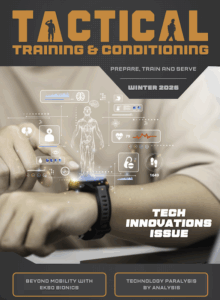
» ALSO SEE: Ekso Bionics is changing the lives of disabled veterans through exoskeleton technology
For command, present aggregate readiness trends, injury-mitigation insights, program efficacy summaries, operational capability indicators, and resource justifications tied directly to data. Command does not need every line item. They need the story, the operational meaning behind the numbers.
Data is not the goal; decision-making is.
Tactical coaches must refine what they collect, how they organize it, and how they translate it into actionable direction. Operators must learn to internalize their data as a feedback system that drives smarter preparation and safer performance. When both sides value clarity over complexity, data transitions from being overwhelming to becoming transformative.
This is how we prevent paralysis by analysis and turn information into tactical advantage.