Winter 2026
How AI will personalize training through real-time readiness data
Artificial intelligence (AI) is rapidly reshaping our culture today. The tactical world is positioned to benefit more than almost any other population. This can be a huge tool for tactical human performance professionals if used correctly.
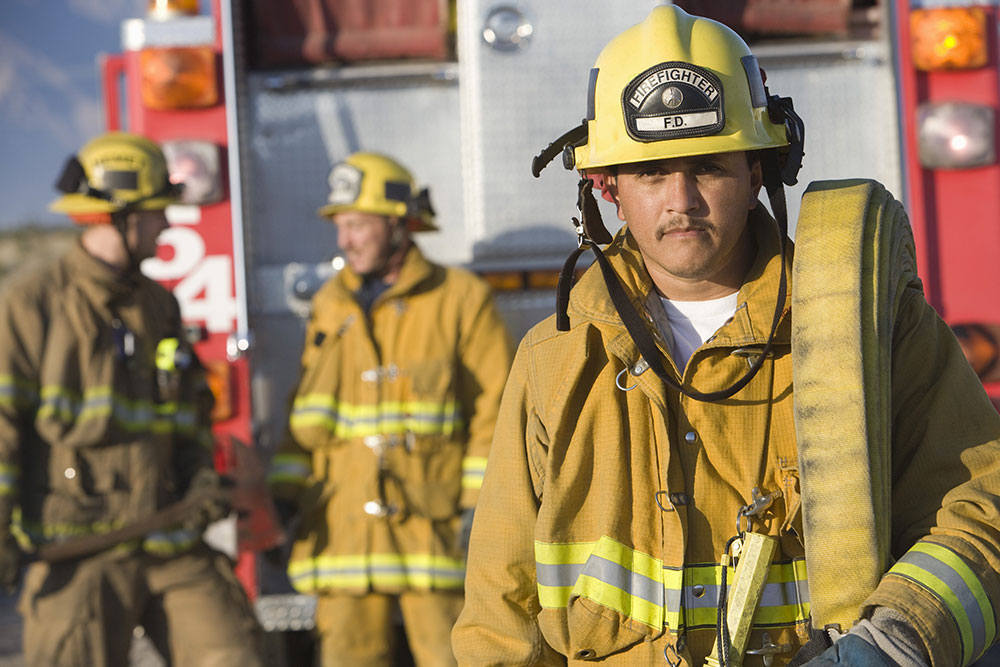
Firefighters, law enforcement professionals, and military operators do not live in controlled environments. Their careers depend on their ability to perform under unpredictable stress, chronic sleep restriction, environmental extremes, and irregular training availability. Traditional strength and conditioning models, especially those built on fixed cycles, struggle to account for these realities.
This is not about replacing coaches or eliminating professional judgment. It’s about enhancing tactical readiness through more precise, individualized decision making. Below is a practical look at how AI is being integrated into tactical fitness and what it means for those who serve.
Why AI will be a game-changer for tactical operators
In competitive sports, training variables can be tightly controlled. Tactical professionals have no such luxury. Alarms disrupt their sleep, their stress fluctuates, their workloads spike during calls, and their recovery windows are inconsistent. This creates massive variation in readiness from day to day.
AI could offer several advantages in this context, if it reaches its full potential:
- Eliminating guesswork by consolidating multiple data streams into one readiness picture.
- Adjusting training automatically when recovery is compromised or when the operator is primed for higher-intensity work.
- Identifying patterns humans would miss, such as combinations of sleep loss, elevated resting heart rate, and HRV suppression that predict fatigue or injury risk.
- Providing individualized programming, even among operators on the same crew or shift.
In short, AI will allow tactical professionals to train with the same level of precision as elite athletes while accounting for the complexity of shift work and operational stress that athletes never experience.
The data streams powering AI-driven tactical training
The true strength of AI lies in its ability to integrate the following variables into a constantly evolving readiness profile.
Wearable technology
Devices such as Polar, Garmin, WHOOP, and Oura collect real-time physiological data, including heart rate variability (HRV), resting heart rate (RHR), stress load, and recovery scores. AI will use this information to gauge the balance of the autonomic nervous system and determine how well the operator has recovered.
A suppressed HRV paired with an elevated RHR, for example, is one of the earliest indicators of poor recovery. AI will automatically recognize this and adjust training intensity accordingly.
Heart rate monitors
Chest strap monitors remain the gold standard for accurate training data. This allows the system to adjust workloads in real time, ensuring training stays effective without overshooting intensity. AI will use heart rate feedback to monitor:
- Aerobic efficiency
- Heart rate drift
- Zone fidelity
- Response to interval work
Sleep monitors
Sleep quality and quantity remain among the strongest predictors of recovery. AI models will analyze:
- Total sleep time
- Sleep debt
- REM and deep sleep ratios
- Disruptions during the night
- Shift-related irregularities
For firefighters and other shift workers, sleep data can drastically shift training recommendations. A night with multiple calls may prompt a lower-intensity recovery session instead of a planned high-intensity day.
Shift schedule integration
Unlike athletes, tactical operators follow cycles such as 24/48, 48/96, and 24/72. AI platforms can integrate the operator’s exact schedule to identify:
- High-fatigue windows (post-shift or after multiple calls)
- Optimal training windows (mid-cycle days off)
- Patterns of accumulated stress over multi-week rotations
This ensures the training plan fits the operator’s life instead of forcing their life into the plan.
How AI will personalize training for tactical professionals
AI-driven tactical programming is rooted in adaptability. Instead of following a static weekly plan, sessions evolve daily based on the operator’s readiness.
Daily load adjustments
Volume, intensity, and exercise selection are modified based on readiness markers. These shifts keep training productive without risking excessive fatigue or injury. For example:
- Low readiness → mobility, movement prep, and Zone 2 aerobic work
- Moderate readiness → strength technique, moderate-intensity conditioning
- High readiness → heavy lifts, power work, intervals, task-specific intensities
Adaptive aerobic progression
AI will evaluate heart rate drift and aerobic efficiency. When an operator improves, the plan automatically progresses:
- Longer Zone 2 sessions
- More precise threshold intervals
- Timed VO2 efforts based on physiological response
Integrated recovery strategies
AI will suggest the following, which reinforces longevity and operational preparedness:
- Sleep extension
- Hydration goals
- Recovery modalities
- Stress management practices
- Low-intensity movement sessions
The bigger impact: Career longevity and operational safety
AI-driven programming isn’t about shortcuts — it’s about long-term health and readiness. Tactical operators face career-threatening injuries, chronic fatigue, and long-term cardiac risks. By making training more responsive, AI will reduce unnecessary strain and promote consistent adaptation. Operators will benefit from:
- Lower injury risk
- Greater year-round performance
- Improved sleep and recovery habits
- Higher training efficiency
- Better mental readiness and resilience
» ALSO SEE: How protein can improve performance and speed up recovery
This is the future of tactical performance — not harder training, but smarter, individualized training driven by real data.
The road ahead
As AI evolves, tactical programming will continue advancing. Future integrations may include:
- VO2 and lactate threshold testing
- Real-time thermal stress monitoring
- SCBA workload data
- Continuous glucose monitoring (CGM) feedback
- Predictive injury modeling
For the first time, tactical professionals will be able to train based on the operator standing in front of them today, not the one they hoped would show up.
AI isn’t replacing coaches. It’s empowering them. And in the tactical community, where the cost of poor readiness can be life or death, that precision matters more than ever.