Winter 2026
Data-driven tactical operators have an edge in the gym and on the job
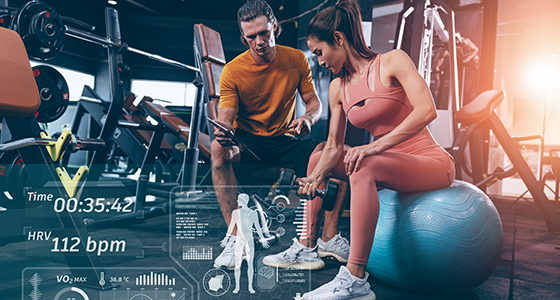
Data-driven tactical conditioning is an important tool that illustrates the user’s data points or metrics for their own tactical human performance, development, and overall health profile for tangible improvements. When the tactical athlete has these available metrics, they can make better-informed decisions as to where their current training is and what modifications need to be implemented or removed.
With this data in hand, the tactical athlete can not only alter their own training plan but can also aid in reducing injuries through recognizing asymmetries in their musculoskeletal system, which, if left unrecognized, can lead to overuse. By combating overusage, the tactical athlete can also avoid overtraining through a better-designed recovery strategy. Through a performance analysis perspective, the tactical athlete can measure their improvements in strength, power, speed and endurance. When made cognizant, these metrics will keep the tactical athlete honest and accountable to their intended goal.
Data-driven tactical conditioning is utilized within the tactical community of 1st responders, which includes law enforcement, firefighters, corrections, emergency medical services, and the US Military, with only a few tangible instruments. Some of these include a body composition analyzer/machine scanner, GPS Technology, such as smart watches, and AI-powered fitness apps at a minimum. A body scanner enables the tactical athlete to assess the balance of muscle and fat by providing an analysis of fat percentage, muscle mass, and body shape. As with the general public, smartwatches are increasingly prevalent within the 1st Responder community, as they not only track your workouts with immediate feedback such as total volume and intensities through monitoring sets and repetitions, but they also track heart rate zones and much more.
Smartwatches calculate fatigue and readiness for the ensuing mission. To maintain efficient cardiovascular health, the tactical athlete must train across all energy systems and, as mentioned above, heart rate zones. These five heart rate zones are depicted in the following manner: HRZ 1 – 50-60% of Maximal Heart Rate (MHR) (Resting Level) / HRZ 2 – 60-70% of MHR (brisk walk/can hold a comfortable conversation) / HRZ 3 – 70-80% of MHR (Race Pace/Tempo/conversation becomes difficult) / HRZ 4 – 80-90% of MHR (Interval Training/short periods of elevated intensity) / HRZ 5 – 90-100% of MHR (High Intensity Interval Training).
As used by this writer, the Garmin Instinct 3 Solar offers additional tools, including safety and tracking features such as incident detection and assistance, which call or send a message with your live location to emergency contacts when paired with your smartphone. This is an excellent feature within the tactical community and specifically for our amazing US Military, who undertake long hikes and missions through difficult terrain. Additionally, more features include advanced sleep monitoring and Pulse Ox. The Pulse Ox feature provides insights into your body’s blood oxygen levels through estimating the amount of oxygen in your bloodstream as it circulates. This benefit assists the tactical athlete by providing data on whether the cells in your body are getting enough oxygen to function at their best. Smartwatches will give tactical athletes and strength and conditioning coaches the most bang for their buck, no matter the model, as they provide a minimum baseline of variables that can assist tactical athletes in understanding data to achieve optimal human performance.
However, in the sports industry and for the optimization of human performance, the tools utilized there are far more widely used than in the tactical arena. These tools enable sport athletes and strength coaches to leverage statistics, machine learning, and data-driven insights to enhance team, player, and overall athletic performance. Within sports, the additional pivotal tools utilized take various forms but include velocity-based trainers and video analysis, in which this data-driven technology, combined with sports science, produces sports analytics to give the sports athlete the competitive edge. Some of the measurable data crucial to sports performance include converting strength into explosive power, reflected in metrics evaluating reaction time and movement efficiency. When an athlete can see data on how well they move in all three anatomical planes of motion, they can then devise a plan to work on those small details to improve performance.
» ALSO SEE: Making actionable data matter when working with tactical operators
Additionally, muscle imbalances, asymmetries, running gait and joint mechanics can all be quantified. Furthermore, assessments can be made on concussions sustained during athletic events, which are done before and after injury to protect the sports athlete’s brain and provide a safe return to the game. When it comes to velocity-based training (VBT), it is an incredible scientific tool for measuring velocity and movement. VBT helps measure your progress to assist you in making educated decisions, such as whether the bar speed during a set of box squats, bench press, or a plyometric drill is slowing down during its execution. If so, adjustments can be made in the ensuing set, the subsequent day, or the following week.
In this writer’s opinion, VBT training is a fantastic tool for improving human performance in both tactical and sport athletes. Not only can it aid the tactical athlete in being cognizant of how much power they actually utilize within their musculoskeletal system through human movement, but it can also provide a better understanding as to how they can direct and transfer power when called upon in their job, such as a violent encounter requiring precision and violence of action. Unfortunately, financial obligations for other operations and administrative endeavors will utilize available monies in the department’s vision. VBT devices are not readily used or are nonexistent in the tactical community.
Daniel J. Borowick, MS, CSCS, is a former DEA Special Agent who has over 27 years of tactical experience in federal (Drug Enforcement Administration/DEA) and state (New Jersey State Police). Borowick was previously a strength and conditioning coach serving in the U.S. Army’s (H2F) Holistic Health and Fitness Program. You reach him through their website www.Domexstrengthandfitness.com, via Instagram @domexstrengthandfitness, LinkedIn @ www.linkedin.com/in/daniel-borowick-aa889a256 /, or Domexstrengthandfitness@gmail.com for a professional consultation on being tactically fit for duty for either yourself and/or your department.