Summer 2026
Building mental toughness in the weight room
Every coach wants athletes who perform under pressure. The challenge is that pressure doesn’t wait until game day or a mission to show up.
At Glenville State University, we believe mental toughness is developed long before competition begins. The offseason provides an opportunity to challenge athletes physically, mentally and emotionally in ways that prepare them for adversity when it matters most.
Whether it’s football players training on a snow-covered field, softball athletes completing team rope runs before sunrise or teams working through demanding conditioning circuits, our goal is the same: create athletes who can stay composed, trust their preparation and continue competing when circumstances aren’t ideal.
Our wrestling program captured a regional championship and finished seventh in the nation.
Our softball program won conference, regional and super regional titles before advancing to the NCAA Division II Women’s College World Series.
Throughout my coaching career, I’ve noticed that the athletes who handle adversity best tend to share many of the same characteristics. They can control their emotions, commit to the process, embrace challenges and maintain confidence when things don’t go their way. Those traits closely align with the four C’s of mental toughness: control, commitment, challenge and confidence.
The first trait is control
Athletes don’t suddenly learn emotional control during the fourth quarter of a close game, rather they develop it through daily preparation in training.
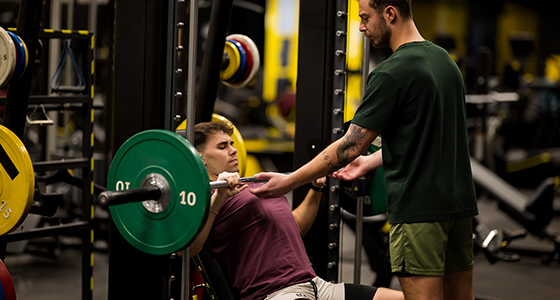
In the weight room, I pay close attention to how athletes respond when they’re corrected. If an exercise isn’t performed correctly, I ask them to do it again. What I’m evaluating isn’t simply their technique; I’m evaluating their response. Do they become frustrated? Do they lose focus? Or do they accept the coaching, make the adjustment and move forward?
Those moments may seem insignificant but they often reveal how an athlete will respond during competition. A missed assignment, turnover or mental mistake can quickly become two mistakes if an athlete loses emotional control. The athletes who learn to manage those emotions in training are often the same athletes who respond best when adversity strikes during a game. The same goes for tactical athletes during a mission.
The second trait is commitment
Every athlete wants the rewards that come with success, but not every athlete is willing to embrace the daily habits required to achieve it.
I make it a point to communicate the purpose behind our training. If we’re entering a difficult phase of the program, I explain why we’re doing it and what we’re trying to accomplish. Once expectations are established, the responsibility shifts to the athlete. They must trust the process and commit to the work.
Commitment is preparation. Every rep, every workout and every decision contributes to how an athlete responds when pressure rises. Showing up on time, finishing every rep, maintaining focus and bringing effort every day might not seem extraordinary, but those habits often separate good athletes from great ones.
The third trait is a willingness to embrace challenges
As coaches, we know adversity is coming — injuries happen, momentum shifts and conditions aren’t always perfect. The question is whether our athletes are prepared to respond when those moments arrive.
That’s why we intentionally create challenges during the offseason.
One way we do that is through team-based conditioning challenges that require effort, communication and accountability from every member of the group.
For example, one challenge I regularly implement comes at the end of upper body training sessions. Athletes are required to hold a weight plate while transitioning through a series of exercises on my command. They perform as many repetitions as possible before moving to the next movement.
The challenge is maintaining focus and discipline when fatigue sets in. If one athlete drops their plate, the entire team starts over. The objective isn’t punishment; it’s accountability. Athletes quickly learn that their preparation and effort affect everyone around them.
Athletes change throughout the offseason. Early on, many athletes simply want to survive the workout. As they develop mentally, they begin embracing the challenge. Instead of looking for ways around adversity, they begin seeing adversity as an opportunity to grow.
The final trait is confidence
Confidence isn’t something coaches can give athletes, rather, it is earned through preparation. When athletes consistently overcome challenging workouts and push through discomfort, they develop confidence because they have proof they can handle adversity.
One exercise I use is a sled push relay competition. Athletes are divided into teams and challenged to determine the most effective strategy to succeed. The competition requires communication, problem-solving and trust under pressure.
Confidence isn’t something coaches can give athletes, rather, it is earned through preparation.
Those experiences teach athletes that confidence extends beyond the individual. Teams that trust their preparation and one another can overcome adversity.
One benefit of mental toughness training that gets overlooked is leadership development.
Athletes who embrace challenges, respond positively to coaching, and encourage teammates naturally emerge as leaders. Before they receive a captain’s title, they’ve already demonstrated the qualities their teammates respect and follow.
Building mental toughness requires athletes to become comfortable being uncomfortable.
That doesn’t always happen inside the weight room.
Our football team has trained outdoors during harsh winter conditions, including snow-covered fields. The purpose isn’t simply to make training harder but it’s to teach athletes that performance cannot depend on ideal circumstances. Our softball team has completed early-morning team rope runs across challenging terrain. Those sessions required communication, resilience, and a willingness to continue moving forward when fatigue set in. In both situations, athletes learn that adversity is temporary and confidence lasts.
Building mental toughness requires more than difficult workouts; it requires a deliberate off-season plan.
At Glenville State University, our goal isn’t simply to build stronger athletes. Our goal is to develop athletes who remain composed under pressure, embrace adversity and trust their preparation when the game is on the line.
Mental toughness is built through daily decisions. Every extra rep and every moment an athlete chooses discipline over comfort contribute to success.
When adversity shows up on game day, our athletes have already faced something tougher in training. That’s how mentally tough teams are built and that’s how programs develop athletes who compete until the final whistle.